 |
The Cultural and Regional Studies area
of the Integrative Studies Program is an innovative approach to
the college’s liberal arts and environmental mission. In this
area of study, students are given the opportunity to understand
the varied cultural responses to the human condition and its environmental
surroundings.
Currently there are four
focus areas:
Cultural
and Regional Studies
This curriculum is designed to enable students to think critically
across a number of disciplines including anthropology, communication,
economics, history, politics and sociology. Students will pursue
a combination of local and field-based courses and explore the interwoven
forces of globalism and localism in a variety of cultural settings.
As part of this exploration, students may also pursue training in
the languages of the region studied. This graduation area is complemented
and enhanced by the rich variety of extra—curricular activities
at Prescott College such as its Amnesty International Club, the
Aztlan Center for Environmental Justice, the Student Environmental
Network and True Directions.
The Cultural and Regional
Studies graduation area is concerned with the explanation of the
relations between and among the cultural practices of everyday life,
economics, the material world, the State, and historical forces
and contexts. Recognizing that "people make history in conditions
not of their own making," CRS seeks to identify and examine
moments when people are manipulated and deceived as well as those
times when they are active, struggling and even resisting. Whenever
possible, we intend to represent the truly international nature
of contemporary life, without ignoring the differences that are
the result of speaking from and to different contexts. Cultural
and Regional Studies offers students the opportunity to explore
four areas of knowledge: Political Economy, Gender Studies, Border
Studies, and Regional Studies.
Religion
and Philosophy
The Religion and Philosophy track of the Integrative Studies program
corresponds directly with our liberal arts mission. In both areas
of study, students experience and endeavor to understand the universal
human process of understanding themselves and their world. Through
religious studies courses, students have the opportunity to explore
a wide variety of religious experience, thought, institutions, texts,
and ethics. These courses are designed to enrich and encourage students’
efforts to relate to the sacred or spiritual aspects of their world.
Our philosophy courses introduce students to the great issues that
have intrigued people through time and offer them opportunities
to develop their own personal philosophies. All of the courses are
aimed at helping students critically think about and evaluate key
issues and communicate their ideas orally and in writing. In keeping
with the mission of the college, the religion and philosophy track
seeks to integrate the human experience on both an intellectual
and spiritual level, integrating not only religions and philosophies,
but also religion and philosophy within the humanities and the sciences.
We offer a curriculum that covers a broad range of spiritual and
intellectual contemplation. Students are encouraged, through class
projects, to become more aware of themselves and their local and
global community.
Peace
Studies
The mission of the Peace Studies curriculum is to further the educational
mission of Prescott College by fostering an academic environment
in which students acquire the knowledge, skills, and experiences
necessary for analyzing and resolving social conflict and for promoting
peace in a variety of social contexts. The primary purpose of the
Peace Studies curriculum is to educate students in ways of thinking,
feeling, and action that enable them to minimize destructive human
behavior and to promote the principles of freedom, justice, respect,
cooperation, love, and personal and global harmony.
Spanish
Language & Literature and Latin American Studies
Our Spanish Language &
Literature and Latin American Studies areas (the
latter co-sponsored by Cultural and Regional Studies) is invigorated
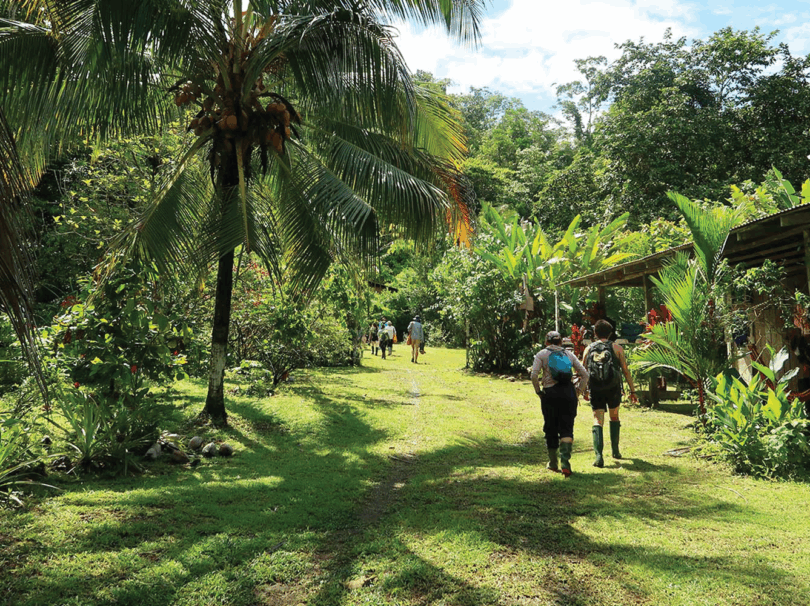
by our proximity to Mexico; most of our Spanish courses take trips
to Mexico and other Latin American countries. We offer Spanish Intensive
courses each year, which combine intensive language study with home
stays in Latin America. We are fortunate to have a field station
in Kino Bay, on the Gulf of California, where students combine their
studies in environmental science and adventure education with cultural
experiences.
The mission of Prescott
College is to educate individuals who will make a difference in
our world as agents of positive change and creative problem-solvers.
Social conflict, from the interpersonal to international, and its
destructive outcomes are pervasive in modern life. Therefore, an
essential feature of our educational mission is to educate students
to exercise the knowledge, skills, and attitudes necessary for analyzing
and resolving social conflict and for creating peace.
The importance of systematically including peace related subjects
in the college curriculum cannot be overstated. We inhabit a world
that requires that we learn to live peacefully with others. Peace
can be defined as "a universal, voluntary, social condition
of harmony among people and the environment, maintained in such
a way that wars cannot occur." This definition connotes not
only an absence of war, but also the absence of preparation for
war and even the expectation of war and destructive human conflicts.
In a democratic society, colleges have a
certain responsibility to prepare students to exercise informed
judgments about human and ecological survival and sustainability.
In fact, this may be the most important function of a liberal education
today
|
 |